
Why a brand identity beats a one-off logo
A logo alone cannot keep a growing business consistent everywhere it shows up. Here is what a brand identity actually contains, and when a simple logo is honestly enough.
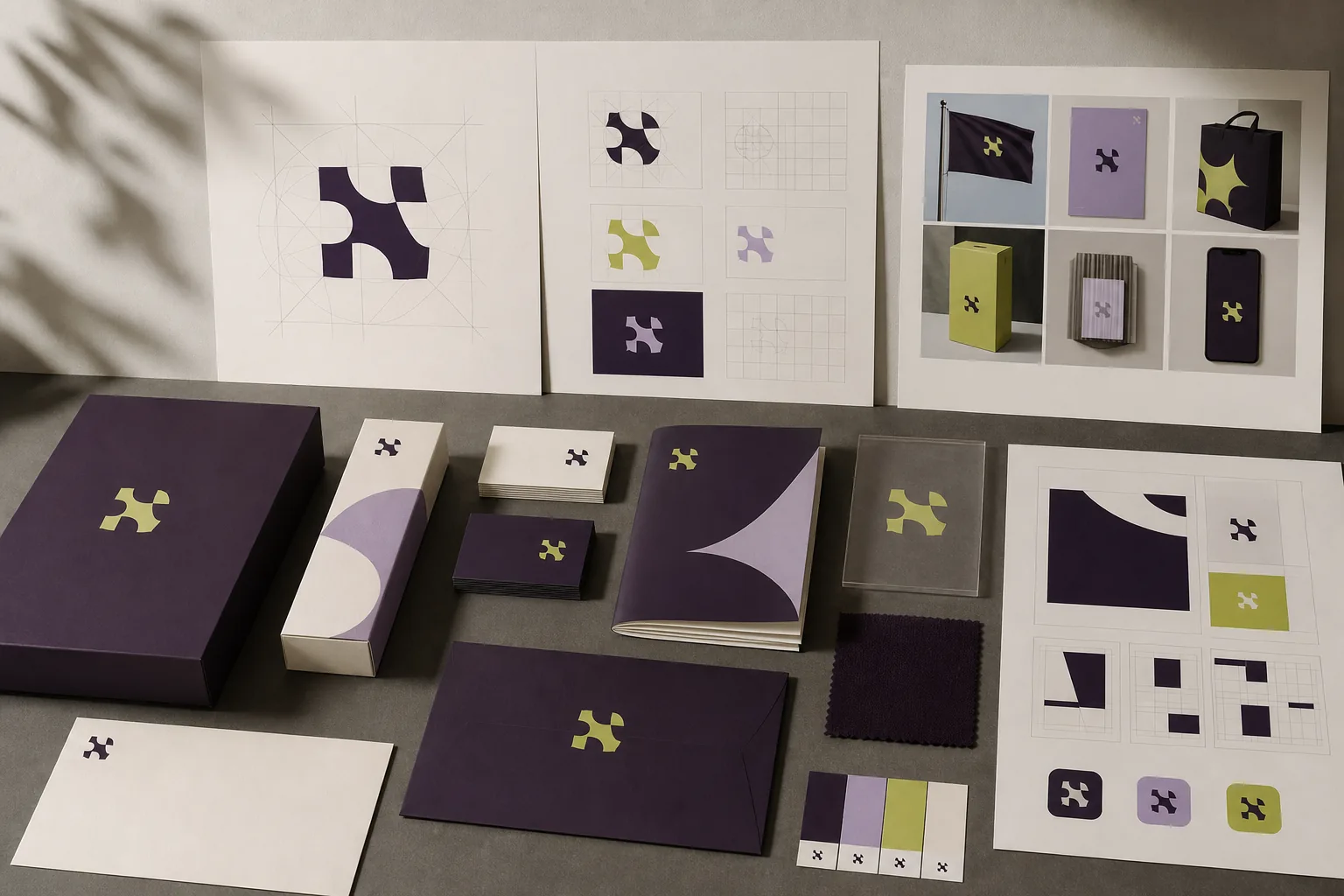
When a business asks for "a logo", what it usually needs is a way to look consistent everywhere it shows up: website, invoices, social posts, packaging, a trade-show booth, an email signature. A logo alone cannot carry that weight. A brand identity can.
What a brand identity actually contains
A brand identity is not a bigger logo file. It is the set of decisions that makes every future design choice faster and more consistent:
- Logo variations: primary, simplified, and small-size versions, with rules for light and dark backgrounds.
- A color palette with defined roles: not just "our blue", but which blue goes on backgrounds, which marks actions, and which combinations stay readable.
- Typography: which typefaces, at which sizes and weights, for headlines, body text, and interfaces.
- Spacing and layout rules that keep materials looking related without being identical.
- Image direction: what photography or illustration should feel like, so any photographer or designer can match it.
- Voice: how the brand sounds in writing, from a headline to an error message.
With these decisions made once, every new piece, whether a landing page, a sales deck, or a social template, starts from a solid base instead of a blank page.
The format matters less than the decisions. A brand identity can live in a shared document, a design-tool library, or a full guidelines site; what makes it work is that the choices are recorded, versioned, and available to everyone producing brand materials, including tomorrow's vendors, who were not in the meeting where the decisions happened.
Where one-off logos break down
A logo without a brand identity behind it tends to fail quietly, months after delivery. The person running social picks a random blue because none was specified. Someone stretches the logo to fit a banner. The print vendor asks for a vector file that does not exist. Each improvisation is small; together they erode the consistency that makes a brand recognizable.
There is also a practical cost. Every undefined decision gets re-made, badly and repeatedly, by whoever is closest to the deadline. Teams spend hours recreating templates that a brand identity would have provided in minutes, and the rework rarely appears on any budget line; it just quietly consumes design time all year.
People trust what they recognize, and they recognize what repeats. Repetition only works when the repeated elements actually match.
People trust what they recognize, and they recognize what repeats.
When a simple logo is honestly enough
Not every project needs a full brand identity, and it would be dishonest to pretend otherwise. If you are testing a business idea, launching a short-lived side project, or operating in a single channel, a well-made logo with a short usage sheet may be all you need. The moment to invest in a full identity is when several people or vendors start producing materials in your name. Budgets are real constraints too, and a sharp logo used carefully beats a half-finished identity nobody maintains.
A useful test: count how many different people created your last ten public-facing pieces. If the answer is more than two, a brand identity pays for itself in avoided rework and drift.
Growing from logo to brand identity
The good news is that this is not all-or-nothing. A brand can start with a logo and a one-page usage guide, then grow into typography, color roles, templates, and motion behavior as the business grows. What matters is that each addition gets recorded as a decision, instead of living as tribal knowledge in one designer's head.
We create brand identities sized to the business that will use them: no hundred-page manuals for a three-person team, and no single orphaned logo file for a company operating in six channels.
F
Written by
Friendly Creative Studios
The team behind Friendly Creative Studios, writing about the work we do across branding, video, web, and campaigns.